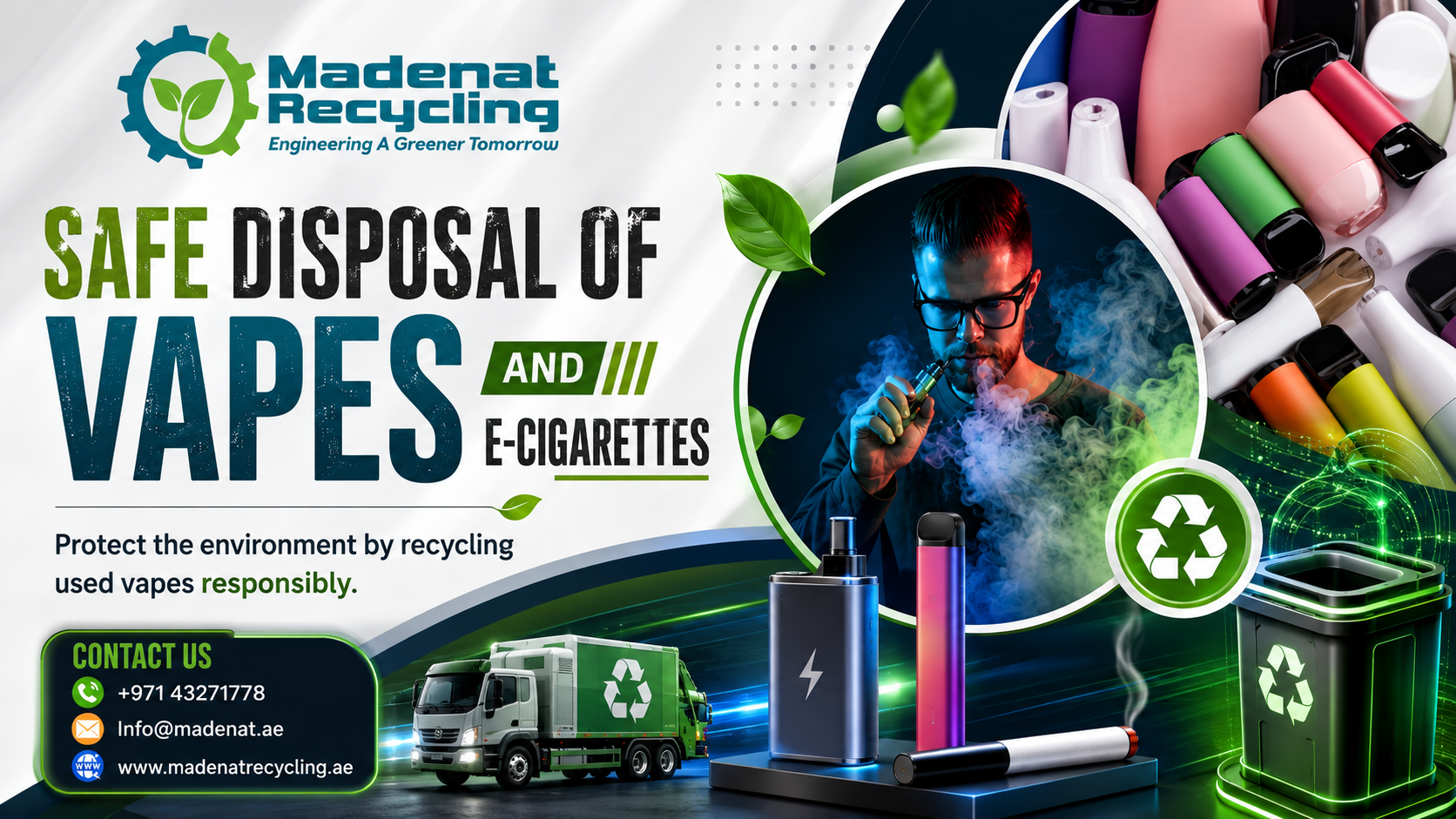
How Businesses Can Manage Safe Disposal Of Vapes And E-Cigarettes
Walk into almost any office kitchen, hotel bin room, or retail staff area these days, and there's a decent chance you'll spot a vape sitting where it really shouldn't be. It's become one of those small but genuinely tricky waste problems that businesses just weren't dealing with a few years ago. These devices aren't like a used coffee cup or a stack of paper. They've got batteries and sometimes leftover nicotine liquid packed into something the size of a highlighter pen.
Toss that into a regular bin. You're not just being careless. You're creating an actual safety risk. That's really the whole point behind Safe Disposal Of Vapes And E-Cigarettes — it's about businesses building a proper, thought-out process instead of just hoping the problem sorts itself out.
Why This Isn't Just Ordinary Rubbish
Here's the thing people often miss. It's not the vape itself that's the problem. It's what's inside it. Most contain lithium-ion batteries that, if those get crushed or overheated which happens easily in a compactor or a bin lorry. They can genuinely catch fire. There have been enough warehouse and bin-truck fires linked to lithium batteries that waste companies now take this seriously, and businesses should too.
On top of the fire risk, there's the environmental side. These devices shouldn't just disappear into general landfill waste, both because of the battery content and because there are actual recoverable materials inside them worth separating out.
Start By Knowing What You're Actually Dealing With
Before you can build a sensible process, it helps to know what counts as vape waste in the first place. This usually includes things like:
- Disposable vapes
- Refillable e-cigarettes
- Loose vape batteries
- Cartridges and podse
- Devices that are damaged or no longer working
- Partially used or empty devices
- Related packaging and accessories
Once you've got a sense of what's coming through your doors, it becomes a lot easier to sort it properly instead of lumping everything together. And a quick note here — don't let anyone start taking devices apart unless it's specifically part of an approved process. Opening up a vape can expose whoever's handling it to leftover liquid or components that aren't meant to be touched casually.
Storing Devices the Right Way, Even Temporarily
Even if collection happens weekly, or devices only build up in small numbers, how you store them in the meantime matters. This is a core part of getting Safe Disposal Of Vapes And E-Cigarettes right in practice, not just on paper.
Set aside a proper spot — away from heat, sunlight, and anywhere the devices could get knocked around or crushed. A drawer next to a radiator or a box left in direct sun isn't going to cut it. Staff should never be tossing these into ordinary bins, and definitely not into compactors.
If a device looks swollen, feels hot, or is leaking, that's a different situation entirely. Don't have someone just shrug and bin it — that one needs careful handling and, ideally, a quick check-in with whoever manages your waste arrangements. A simple labelled container near the point of collection goes a long way toward keeping this stuff out of the general waste stream by accident.
Bringing In the Right Waste Partner
For businesses generating a steady stream of vape waste — think busy retail stores or venues with high footfall — it's worth having a proper conversation with a specialist provider rather than trying to wing it internally. This is where dedicated E-Cigarette Disposal Services can genuinely take the pressure off, since these providers already understand how to collect, transport, and process electronic and battery waste correctly.
What This Looks Like in Dubai
Businesses operating in the UAE need to be a bit more deliberate here, since local rules don't treat this the same as regular commercial rubbish. Disposable Vape Disposal In Dubai should go through recognised waste-management channels rather than the standard bin collection most businesses already have in place.
Given how many of these devices contain batteries and electronic parts, getting this wrong isn't just an environmental issue — it can be a compliance one too. Businesses should have staff separate and store these devices properly and use a provider suited to handling this category of waste. Keeping some record of how waste is being managed is also a sensible habit, even if it's just a simple log.
Alongside disposal, it's worth thinking about Disposable Vape Recycling In Dubai as part of the same conversation. Batteries and certain electronic components can sometimes be recovered rather than simply discarded, though it really depends on the device and what the facility can actually process. Nobody should assume every part of a vape is automatically recyclable just because it goes into a labelled bin — check with the provider first.
Getting Employees On Board
Even the best system falls apart if the people on the ground don't know what to do. Keep the instructions short and practical:
- Never drop vapes into general waste bins
- Keep them away from heat and anything that could ignite them
- Don't crushor attempt to dismantle a device
- Flag anything damaged, swollen, or leaking straight away
- Use the designated collection point
- Let someone know when the container's getting full
A small printed sign near the collection point tends to work better than a long policy document nobody reads.
Why It's Worth the Effort
Getting this right isn't just about avoiding a fire hazard. Though that alone is reason enough. It keeps your premises tidier and customers that things are handled properly. Also supports genuine recycling rather than just sending everything to landfill. It also takes the guesswork away from individual employees. Which matters more than people think. Nobody wants to be the person deciding on the spot whether a leaking vape is "probably fine."
Final Thoughts
Safe Disposal of Vapes and E-Cigarettes is an important part of responsible waste management for businesses. With proper collection, safe storage, and responsible recycling practices, used vapes and e-cigarettes can be handled efficiently while reducing the risk of battery-related incidents and environmental harm. Madenat Recycling provides safe and compliant recycling solutions for electronic waste and lithium-ion batteries across the UAE, helping businesses manage these waste streams responsibly.
Frequently Asked Questions
1. Can businesses put used vapes in general waste?
It is generally not advisable. Vapes can contain lithium batteries and electronic components. So businesses should use an appropriate waste-management route.
2. Why should vapes be separated from ordinary rubbish?
Separating them helps reduce battery-related risks and allows suitable electronic and recyclable components to be handled through appropriate waste streams.
3. Can disposable vapes be recycled?
Some components may be recoverable, depending on the device and available recycling facilities. Businesses should use an appropriate recycling or waste-management provider.
4. What should businesses do with damaged vapes?
Damaged or unusually hot devices should be handled carefully. Employees should avoid unnecessary handling and seek guidance from the relevant waste-management provider.
5. Should businesses have a vape disposal policy?
Yes. A simple written procedure can tell employees how to collect, store, and report unwanted vape devices and who is responsible for arranging collection.